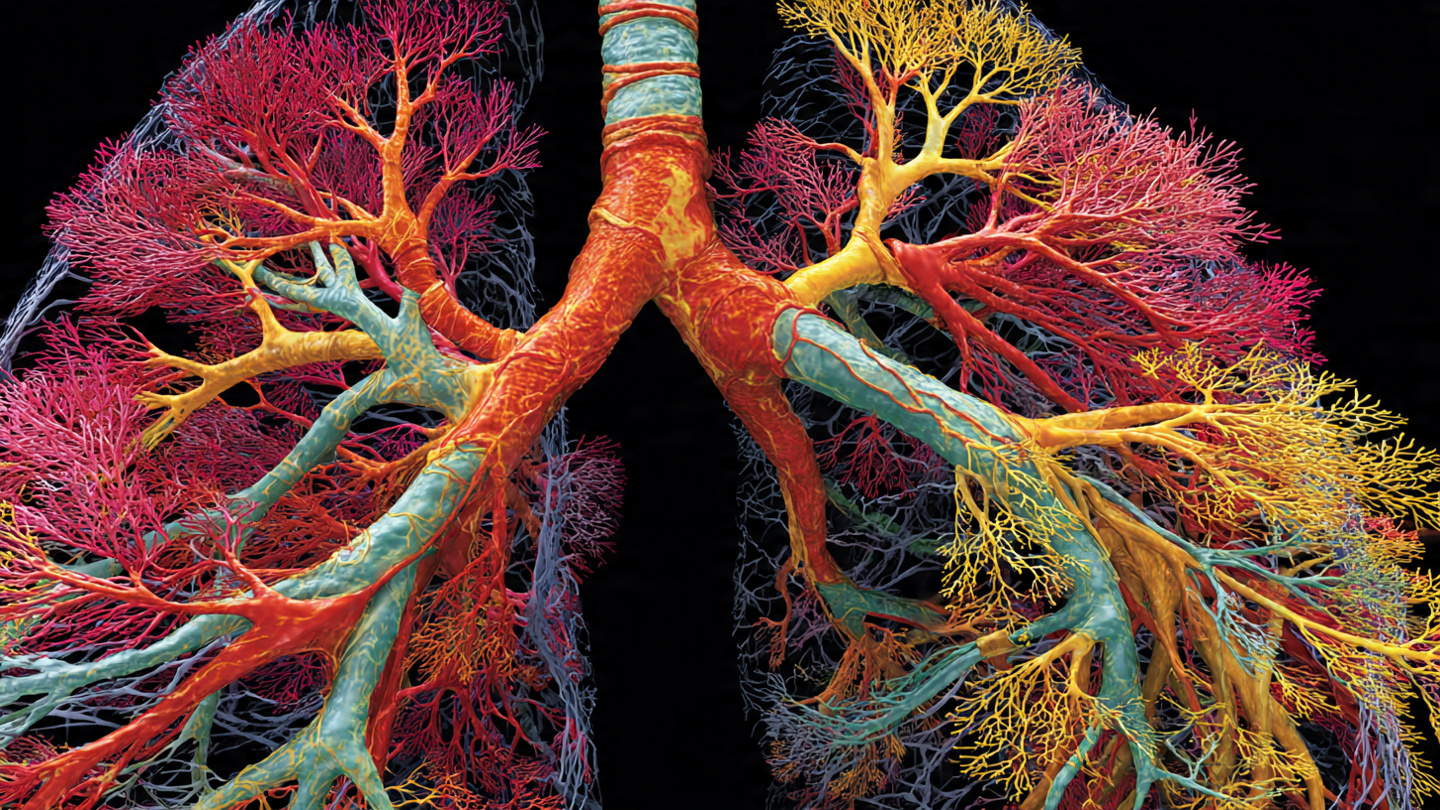
Pulmonary Hypertension
A. General characteristics
- Defined as a mean pulmonary arterial pressure greater than 25 mm Hg at rest
- There are multiple pathophysiologic processes that can cause pulmonary hypertension (Clinical Pearl 2-12):
a. Passive due to resistance in the pulmonary venous system (e.g., left heart failure, mitral stenosis, atrial myxoma - b. Hyperkinetic (left-to-right cardiac shunts such as ASD or PDA)
- c. Obstruction (e.g., PE, pulmonary artery stenosis)
- d. Pulmonary vascular obliteration (e.g., collagen vascular diseases)
- e. Pulmonary vasoconstriction (e.g., chronic hypoxemia, COPD, OSA)
- 3. Classification of pulmonary hypertension is based on the revised WHO classifica
- tion system:
- a. Group 1: Pulmonary arterial hypertension (PAH)
- • Idiopathic, familial, veno-occlusive disease, and PAH with associated condi
- tions (connective tissue disorders, congenital shunting, HIV)
- • An abnormal increase in pulmonary arteriolar resistance leads to thickening
- of pulmonary arteriolar walls. This worsens the pulmonary HTN, which in
- turn causes further wall thickening, thus leading to a vicious cycle.
- • The cause is unknown; it usually affects young or middle-aged women.
- • The prognosis is poor. Mean survival is
- 2 to
- 3 years from the time of diagnosis.
- b. Group 2: Left heart disease
- • Secondary to any cause of left heart failure, including mitral stenosis and
- mitral regurgitation
- c. Group 3: Lung disease and/or chronic hypoxemia
- • Causes include ILD, COPD, OSA, and any other cause of chronic hypoxemia
- d. Group 4: Chronic thromboembolic disease
- • Recurrent PE (many patients do not have symptoms of PE), including non
- thrombotic etiologies (e.g., tumor emboli)
- e. Group 5: Miscellaneous
- • Pulmonary vascular compression (e.g., tumors or lymphadenopathy), sarcoid
- osis, histiocytosis X, etc.
- B. Clinical features
- Symptoms
a. Dyspnea on exertion
b. Fatigue
c. Chest pain—exertional
d. Syncope—exertional (with severe disease) - Signs
a. Loud pulmonic component of the second heart sound (P
2) and subtle lift of
sternum (sign of RV dilatation)—These may be the only findings, and yet the
patient may still have a devastating disease!
b. When right ventricular failure occurs, the corresponding signs and symptoms
appear (JVD, hepatomegaly, ascites, peripheral edema).
C. Diagnosis - ECG: Often suggests right ventricular hypertrophy—specifically, right axis deviation
and right atrial abnormality are frequently present - CXR: Enlarged pulmonary arteries with or without clear lung fields based on the
cause of pulmonary hypertension - Echocardiogram
a. Dilated pulmonary artery
b. Dilatation/hypertrophy of RA and RV
c. Abnormal movement of IV septum (due to increased right ventricular volume) - Right heart catheterization: reveals increased pulmonary artery pressure
Treatment
- One specific treatment plan cannot be recommended due to the variety of causes of
pulmonary HTN. If the pulmonary hypertension is secondary to another disease process (e.g., recurrent PE), then the underlying disease should be treated and optimized. - Vasoactive agents are typically used in PAH (Group 1), since the trials have been
done in this group.
a. Right heart catheterization with a trial of vasodilators should precede the use of
these agents.
b. Vasoactive agents may lower pulmonary vascular resistance in some patients.
Available options include inhaled phosphodiesterase inhibitors (e.g., sildenafil),
oral CCBs, prostacyclins (e.g., epoprostenol), and endothelin receptor antagonists (e.g., bosentan). - Many patients require home oxygen, diuretics, and occasionally inotropes (e.g.,
digoxin). - Lung transplantation in qualified patients.
Cor Pulmonale
A. General characteristics - Cor pulmonale is defined as right ventricular hypertrophy with eventual RV failure
resulting from pulmonary HTN, secondary to pulmonary disease. - The definition does not encompass any of the causes of pulmonary HTN due to
left-sided heart disease (such as mitral stenosis or left-to-right shunts).
B. Causes - It is most commonly secondary to COPD.
- Other causes include recurrent PE, ILD, asthma, CF, sleep apnea, and pneumoconioses.
C. Clinical features - Decrease in exercise tolerance
- Cyanosis and digital clubbing
- Signs of right ventricular failure: hepatomegaly, edema, JVD
- Parasternal lift
D. Diagnosis - CXR: enlargement of the RA, RV, and pulmonary arteries
- ECG: right axis deviation, P pulmonale (peaked P waves), right ventricular hypertrophy
- Echocardiogram: right ventricular dilatation, but normal LV size and function;
useful in excluding LV dysfunction
E. Treatment - Treat the underlying pulmonary disorder.
- Use diuretic therapy cautiously because patients may be preload-dependent.
- Apply continuous long-term oxygen therapy if the patient is hypoxic.
- Administer digoxin only if there is coexistent LV failure.
- A variety of vasodilators have been studied; no definite improvement has been
shown with their use.
Pulmonary Embolism
A. General characteristics - A PE occurs when a thrombus in another region of the body embolizes to the
pulmonary vascular tree via the RV and pulmonary artery. Blood flow distal to the
embolus is obstructed. - Consider PE and deep venous thrombosis (DVT) as a continuum of one clinical
entity (venous thromboembolism)—diagnosing either PE or DVT is an indication
for treatment.
- Sources of emboli
a. Lower extremity DVT—PE is the major complication of DVT.
• Most pulmonary emboli arise from thromboses in the deep veins of lower
extremities above the knee (iliofemoral DVT).
• Pulmonary emboli can also arise from the deep veins of the pelvis.
• Although calf vein thrombi have a low incidence of embolizing to the lungs,
in many patients these thrombi progress into the proximal veins, increasing
the incidence of PE.
b. Upper extremity DVT is a rare source of emboli (it may be seen in IV drug
abusers). - Risk factors are those for DVT (see Clinical Pearl 2-13).
- Pathophysiology
a. Emboli block a portion of pulmonary vasculature, leading to increased pulmonary vascular resistance, pulmonary artery pressure, and right ventricular pressure. If it is severe (large blockage), acute cor pulmonale may result.
b. Blood flow decreases in some areas of the lung. Dead space is created in
areas of the lung in which there is ventilation but no perfusion. The resulting
hypoxemia and hypercarbia drive respiratory effort, which leads to tachypnea.
c. If the size of the dead space is large (large PE), clinical signs are more overt
(SOB, tachypnea). - Course and prognosis
a. Most often, PE is clinically silent. Recurrences are common, which can lead to
development of chronic pulmonary HTN and chronic cor pulmonale.
b. When PE is undiagnosed, mortality approaches 30%. A significant number of
cases are undiagnosed (as many as 50%).
c. When PE is diagnosed, mortality is 10% in the first 60 minutes. Of those who
survive the initial event, approximately 30% of patients will die of a recurrent PE if left untreated. Most deaths are due to recurrent PE within the first
few hours of the initial PE. Treatment with anticoagulants decreases the mortality to 2% to 8%.
B. Clinical features - Symptoms (frequency per the PIOPED study)
a. Dyspnea (73%)
b. Pleuritic chest pain (66%)
c. Cough (37%)
d. Hemoptysis (13%)
e. Note that only one-third of patients with PE will have signs and symptoms of a
DVT
f. Syncope seen in large PE - Signs (frequency per the PIOPED study)
a. Tachypnea (70%)
b. Rales (51%)
c. Tachycardia (30%)
d. S4 (24%)
e. Increased P2 (23%)
f. Shock with rapid circulatory collapse in massive PE
g. Other signs: low-grade fever, decreased breath sounds, dullness on percussion
C. Diagnosis
- ABG levels are not diagnostic for PE (see Clinical Pearl 2-14).
a. PaO2 and PaCO2 are low (the latter due to hyperventilation) and pH is high;
thus, there is typically a respiratory alkalosis.
b. The A–a gradient is usually elevated. A normal A–a gradient makes PE less
likely, but cannot be relied on to exclude the diagnosis. - CXR—usually normal.
a. Atelectasis or pleural effusion may be present.
b. The main usefulness is in excluding alternative diagnoses.
c. Classic radiographic signs such as Hampton hump or Westermark sign are rarely
present. - Venous duplex ultrasound of the lower extremities.
a. If there is a positive result, treat with IV anticoagulation (heparin); treatment of
DVT is the same as for PE. Keep in mind that with this approach, a false positive ultrasound will result in anticoagulation of some patients who do not have
DVT or PE. Also, a negative result is not helpful, as patient may still have a PE
despite no DVT on ultrasound.
b. This test is very helpful when positive, but of little value when negative (negative results occur in 50% of patients with proven PE). - V
∙
/Q∙
(Ventilation–perfusion lung) scan
a. Traditionally, this was the most common test used when PE is suspected, but
has been replaced by CT angiography (CTA) as the initial study of choice in
many medical centers.
b. Plays an important role in diagnosis when there is a contraindication to CTA.
• May be useful when the chest x-ray is clear and when there is no underlying
cardiopulmonary disease.
c. Interpretation of results: can be either normal, low-probability, intermediateprobability, or high-probability (treatment guidelines based on PIOPED study).
• A normal V
∙
/Q∙
scan virtually rules out PE—no further testing is needed—but
a scan is almost never “normal” in anyone.
• A high-probability V
∙
/Q∙
scan has a very high sensitivity for PE; treat with
heparin.
• If there is low or intermediate probability, clinical suspicion determines
the next step. If clinical suspicion is high, pulmonary angiography is indicated. Alternatively, perform a lower extremity duplex ultrasound to avoid
pulmonary angiography. If the duplex is positive, treatment for DVT is the
same as for PE. If the duplex is negative/uncertain, then pulmonary angiography is indicated to exclude PE.
- CTA
a. Has been found to have good sensitivity (>90%) and specificity.
b. Can visualize very small clots (as small as 2 mm); may miss clots in small subsegmental vessels (far periphery).
c. The test of choice in most medical centers.
d. In combination with clinical suspicion, guides treatment (see Figure 2-14).
e. CTA cannot be performed in patients with significant renal insufficiency
because of the IV contrast that is required. - Pulmonary angiography is the gold standard.
a. Definitively diagnoses or excludes PE, but is invasive. Contrast injected into
pulmonary artery branch after percutaneous catheterization of femoral vein.
b. Consider when noninvasive testing is equivocal and risk of anticoagulation is
high, or if the patient is hemodynamically unstable and embolectomy may be
required. Angiography is rarely performed because it carries a 0.5% mortality. - D-dimer assay
a. D-dimer is a specific fibrin degradation product; levels can be elevated in
patients with PE and DVT.
b. D-dimer assay is a fairly sensitive test (90% to 98%). If results are normal and
clinical suspicion is low, PE is very unlikely.
D-dimer Spiral CT scan
Normal No PE PE
present
DVT
present Treat No
treatment No DVT
Leg ultrasound
Inconclusive Cannot be
performed Abnormal
Suspected PE
Clinical Decision Rule (see Box 2-16)
PE clinically unlikely
(Decision Rule score 4)
PE clinically likely
(Decision Rule score >4)
V/Q scan or pulmonary
c. Specificity is low—D-dimer results may also be elevated in MI, CHF, pneumonia, and the postoperative state. Any cause of clot or increased bleeding can
elevate the D-dimer level.
- Overall, the workup of suspected PE is based on pretest probability. The Wells
criteria (Clinical Pearl 2-15) is a scoring system that takes this into account and
helps guide the workup.
a. IF PE is unlikely based on the scoring system, then the pretest probability
for PE is low and D-dimers can be ordered to exclude PE. If PE is likely, CTA
should be performed given its high sensitivity and specificity.
D. Treatment - Supplemental oxygen to correct hypoxemia. Severe hypoxemia or respiratory failure requires intubation and mechanical ventilation.
- Acute anticoagulation therapy with either unfractionated or low-molecular-weight
heparin to prevent another PE. Anticoagulation prevents further clot formation,
but does not lyse existing emboli or diminish thrombus size.
a. Start immediately on a basis of clinical suspicion. Do not wait for studies to
confirm PE if clinical suspicion is high.
b. Give one bolus, followed by a continuous infusion for 5 to 10 days. The goal is
an aPTT of 1.5 to 2.5 times control.
• Heparin acts by promoting the action of antithrombin III.
• Contraindications to heparin include active bleeding, uncontrolled HTN,
recent stroke, and heparin-induced thrombocytopenia (HIT).
• Low-molecular-weight heparin has better bioavailability and lower complication rates than unfractionated heparin. It has been shown to be at least as
effective or more effective than unfractionated heparin. - Oral anticoagulation with warfarin or one of the novel oral anticoagulants (e.g.,
rivaroxaban) for long-term treatment.
a. Can start with heparin on day 1
b. Therapeutic INR is 2 to 3.
c. Continue for 3 to 6 months or more, depending on risk factors. Some patients
at significant risk for recurrent PE (e.g., malignancy, hypercoagulable state) may
be considered for lifelong anticoagulation. - Thrombolytic therapy—for example, streptokinase, tissue plasminogen activator
(tPA).
a. Speeds up the lysis of clots.
b. There is no evidence that thrombolysis improves mortality rates in patients
with PE. Therefore, its use is not well defined at this point - c. Situations in which thrombolysis should be considered:
- • Patients with massive PE who are hemodynamically unstable (persistent
- hypotension).
- • Patients with evidence of right heart failure (thrombolysis can reverse this).
- d. Catheter-directed thrombolysis has lower systemic side effects and should be
- considered in patients at high risk for systemic fibrinolysis or surgery.
- Inferior vena cava interruption (IVC filter placement).
a. Use has become more common but reduction in mortality has not been conclusively demonstrated.
b. Patients who have IVC filter placed are at higher risk of recurrent DVT (but
lower risk of recurrent PE).
c. Complications of IVC filter placement (rare): filter migration or misplacement,
filter erosion and perforation of IVC wall, and IVC obstruction due to filter
thrombosis.
d. Indications include:
• Contraindication to anticoagulation in a patient with documented DVT or PE.
• A complication of current anticoagulation.
• Failure of adequate anticoagulation as reflected by recurrent DVT or PE.
• A patient with low pulmonary reserve who is at high risk for death from PE. - Surgical thrombectomy
a. Consider in patients with hemodynamic compromise, a large, proximal thrombus, and who are poor candidates for fibrinolytics.